быстрая доставка ~4 недели
Размер
- 100 μg
- 1000 μg
- 500 μg
Rabbit anti-Human Neurogranin mAb (DET) (RM17873)
- Описание
- Характеристики
-
Overview
Product name Rabbit anti-Human Neurogranin mAb (DET) Catalog No. RM17873 Catagory Elisa Antibody Kit Application ELISA Description Neurogranulin (NRGN, also known as RC3, p17 and BICKS) is a protein with a molecular weight of 7.5 kD and consisting of 78 amino acids. It is usually found in the granular structures of the hippocampus and pyramidal cells of the cortex, which gives rise to the name "neurogranule protein". The sequence homology between human and rat coding for NRGN is 90% at the nucleic acid level and 96% at the protein level. In early studies, NRGN was primarily identified as a postsynaptic protein in adult rat telencephalon, specifically in the cell bodies and dendrites of neurons in the cerebral cortex, hippocampus and striatum. Since then, NRGN has been detected at low expression levels in the lung, spleen and bone marrow. In addition, high and moderate levels of NRGN were found in platelets and B-lymphocytes, respectively.The present data strongly suggest that NRGN is involved in synaptic plasticity and regeneration mediated by calcium and calmodulin signalling pathways. NRGN was found to enhance postsynaptic sensitivity and increase synaptic strength in an activity- and NMDAR-dependent manner.NRGN has been suggested to bind intracellularly to calmodulin (CaM) and phosphatidic acid (PA).NRGN binds to CaM via its IQ motif (aa 33-46), so called because of the presence of aa at positions 33 and 34 of the aa sequence of Nn isoleucine (I) and glutamine (Q); this IQ motif is well conserved in other CaM-binding proteins, including growth-associated protein 43 (GAP-43) and Purkinje cell protein 4 (Pcp4, also known as PEP-19).NRGN plays an important role in long-term potentiation (LTP), enhancing synaptic plasticity by regulating CaM signalling in response to intracellular calcium concentrations. LTP is thought to be essential for the formation of long-term memory. It has been observed that NRGN expression in the hippocampus of mice decreases with age, which is associated with age-related CNS dysfunction.Furthermore, NRGN knockout mice are deficient in learning and memory, whereas NRGN upregulation restores LTP and cognition NRGN can be detected at increased concentrations in the cerebrospinal fluid (CSF) of patients with Alzheimer's disease (AD), both as full-length proteins and C-terminal fragments. Elevated concentrations of NRGN have also been found in the cerebrospinal fluid of patients with Creutzfeldt-Jakob disease. Immunogen Recombinant Human Neurogranin Purirty Affinity purification Ig Type Rabbit IgG Formulation Supplied as a 0.2um filtered solution in PBS with 0.1%Braveds MB-1, PH 7.8. CrossReactivity / Storage This antibody can be stored at 2℃-8℃ for one monthwithout detectable loss of activity. Antibody products are stable for twelve months fromdate of receipt when stored at -20℃ to -80℃. Preservative-Free. Avoid repeated freeze-thaw cycles.
Application
Recommended
ConcentrationSample ELISA Capture 1-4ug/mL Rabbit anti-Human Neurogranin (CAP)(Cat. No.RM17872) ELISA Detection 0.1-0.4ug/mL Rabbit anti-Human Neurogranin (DET)(Cat. No.RM17873) Standard 39.06-2500pg/mL Recombinant Human Neurogranin Protein Rabbit anti-Human Neurogranin mAb (DET) images
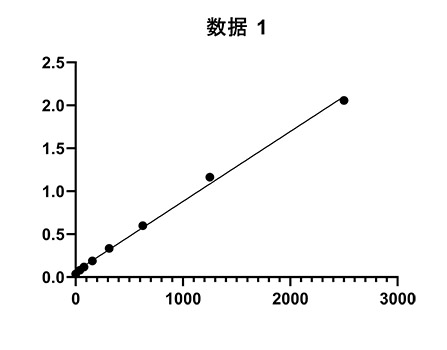
This standard curve is only for demonstration purposes. A standard curve should be generated for eachassay.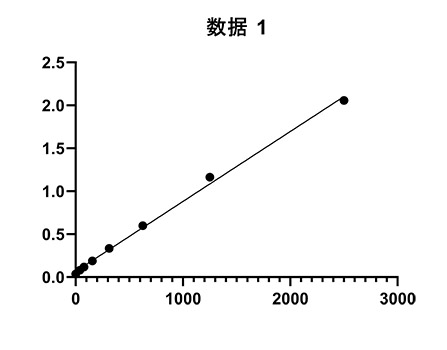
-
Antibody type Matched antibody pairs Reactivity Человек Immunogen Recombinant Human Neurogranin